
When your water heater stops working, you have an important decision to make: should you repair the existing unit or replace it with a new one?
For homeowners in Portage, Kalamazoo, Battle Creek and throughout Southwest Michigan, the right answer depends on the age of the water heater, the problem you're experiencing, the cost of repairs, and your household's hot water needs. Water quality also plays a role, especially in homes with private wells.
At Portage Plumbing Services, we help homeowners determine whether a water heater repair makes sense or whether replacing the unit is the better long-term investment. We work with traditional tank water heaters and high-efficiency tankless systems, helping you choose an option that fits your home, budget, and hot water demands.
Here's what you need to know before deciding whether to repair or replace your water heater:
Signs Your Water Heater May Need Repair
Not every water heater problem means you need a new unit. Many common issues can be corrected by replacing a component, cleaning the system, or adjusting its settings.
If your water heater is relatively new and the tank itself is in good condition, repairing it may be the most cost-effective option.
1. "I'm not getting hot water out of the tap."
No hot water is one of the most common reasons homeowners call a plumber.
Depending on the type of water heater you have, the problem could be caused by:
A failed heating element in an electric water heater.
A faulty thermostat.
A problem with the gas burner or ignition system.
An electrical supply issue or tripped breaker.
A malfunctioning control board or sensor.
A tankless water heater fault that prevents normal operation.
The first step is to identify why the unit isn't heating water. A failed component may be repairable without replacing the entire system.
2. "We have hot water, but it runs out too quickly."
If your family runs out of hot water after one shower or can't run multiple fixtures at once, several issues could be responsible.
A traditional tank water heater may have a failed heating element, excessive sediment buildup, or insufficient capacity for your household. A tankless water heater may have a flow limitation, a maintenance issue, or a problem with its temperature settings.
Sometimes the water heater is working correctly but simply isn't sized for the home's demands. In that case, a larger tank or a properly sized tankless system may be a better solution.
3. "The water heater is making popping or rumbling noises."
Popping, rumbling, or banging sounds from a tank water heater can indicate sediment buildup inside the tank.
Southwest Michigan homes can have different water conditions depending on whether they use municipal water or a private well. Mineral deposits and sediment can accumulate over time, reducing efficiency and potentially contributing to premature equipment failure.
Depending on the condition of the unit, professional maintenance may help. If the tank is heavily scaled or deteriorating, however, replacement may be the more practical option.
4. "The water temperature keeps changing."
Water that alternates between hot and cold can point to a faulty thermostat, a heating problem, a mixing valve issue, or a tankless system that isn't operating correctly.
A plumbing professional can test the system and determine whether a component needs repair or whether the water heater is undersized for the household's demand.
5. "Our water heater is showing an error code."
Modern tankless water heaters and some conventional units use diagnostic codes to identify problems. These may indicate ignition failures, sensor faults, inadequate water flow, overheating, or maintenance requirements.
An error code is a starting point for diagnosis, not necessarily a reason to replace the unit. Proper troubleshooting can help determine whether the issue is a relatively simple repair or a more significant equipment failure.
When does repair make the most sense?
Repair is often worth considering when the water heater is relatively young, the tank is not leaking, replacement parts are available, and the repair cost is reasonable compared with installing a new unit.
A professional diagnosis is the best way to avoid replacing a water heater that could have been repaired.
Signs It's Time to Replace Your Water Heater
Some problems indicate that replacement deserves serious consideration. Continuing to repair an aging water heater can become more expensive and less reliable than installing a new one.
1. "My water heater is leaking."
A leaking water heater requires prompt attention, but the source of the leak matters.
Water around the unit could come from a loose connection, a drain valve, a temperature and pressure relief valve discharge, or the tank itself.
If the tank has developed a leak due to corrosion or internal deterioration, it generally cannot be repaired reliably. Replacing the water heater is usually the appropriate solution.
If you discover water around your water heater:
Check for obvious signs of water coming from the tank or nearby piping.
If it is safe to do so, shut off the water supply to the unit.
If water is near electrical equipment, do not touch wet electrical components.
Contact a licensed plumbing professional to identify the source.
A leaking tank can cause substantial property damage, so don't ignore the problem.
2. "Our water heater is 10 to 15 years old."
Age alone doesn't automatically mean a water heater needs replacement, but it is an important consideration.
Many conventional tank water heaters have a service life of roughly 8–12 years, although some last longer or fail earlier. Tankless units often have a longer potential service life, depending on maintenance, water quality, usage, and installation conditions.
If your older water heater is also experiencing recurring problems, rusty water, leaks, or inconsistent temperatures, replacement may be a better investment than another repair.
3. "We've had to repair it several times."
Repeated service calls can add up quickly. If a water heater has required multiple repairs in a short period, it's worth comparing the cost of continued maintenance with the cost of a new installation.
A replacement can also provide an opportunity to improve capacity, efficiency, reliability, and hot water delivery.
4. "The hot water looks rusty or discolored."
Discolored hot water can be caused by corrosion inside the tank, deteriorating plumbing, or minerals and sediment in the water supply.
The cause should be identified before assuming the water heater has failed. If internal tank corrosion is responsible, however, replacement is generally the right solution.
5. "We want more hot water and better efficiency."
Sometimes a water heater still works but no longer meets the household's needs.
A growing family, a bathroom remodel, a larger soaking tub, or simultaneous showers and laundry can increase hot water demand. Replacing an undersized unit with a properly sized tank or tankless system may improve comfort and convenience.
When is replacement the better choice?
Replacement is often the best option when the tank is leaking, the equipment is approaching the end of its expected service life, repairs are becoming frequent, or the existing system cannot meet the home's hot water needs.
Tank vs. Tankless Water Heaters: Which Is Right for Your Home?
Once you decide to replace your water heater, the next question is whether to install another traditional tank or upgrade to a tankless system.
Both options can work well in Southwest Michigan. The best choice depends on household size, hot water usage, available space, fuel supply, installation requirements, and water quality.
Traditional Tank Water Heaters
A traditional water heater stores a supply of heated water in an insulated tank, commonly in sizes such as 40, 50, or 75 gallons.
A tank water heater may be the best fit if you:
Want a lower initial installation cost.
Have a conventional water heater setup that is straightforward to replace.
Prefer a familiar, relatively simple system.
Have predictable hot water needs that fit the tank's capacity.
Want to minimize upfront equipment and installation expenses.
The main limitation is that the supply of stored hot water is finite. Once the tank is depleted, the unit needs time to heat another supply.
Tank water heaters also lose some heat while storing hot water, although modern insulation helps reduce these losses.
Tankless Water Heaters
Tankless water heaters heat water as it flows through the unit rather than storing a large volume of hot water.
A tankless water heater may be the best fit if you:
Want a continuous supply of hot water within the system's capacity.
Have a busy household with frequent hot water use.
Want to save floor space.
Are planning a renovation or upgrading an older water heater.
Want to explore potential long-term energy savings.
Tankless systems are especially attractive for households that frequently use hot water throughout the day. However, they must be sized for the home's peak demand. Running several showers and other hot water fixtures simultaneously can exceed a unit's capacity.
Converting from a conventional tank to tankless may also require gas line upgrades, venting changes, condensate drainage, electrical work, or other modifications.
Tankless systems also require appropriate maintenance. The cost and frequency of maintenance depend on the equipment and local water conditions.
City Water vs. Well Water: What Should You Consider?
Water quality is an important part of choosing and maintaining a water heater.
Homes on municipal water
City water varies by municipality and can contain minerals that contribute to scale buildup. A traditional tank or tankless water heater can work well with municipal water when the system is properly installed and maintained.
Tankless heat exchangers can be particularly sensitive to mineral scale, which may reduce performance and make periodic descaling necessary.
Homes on private wells
Private well water varies considerably from property to property. Some Southwest Michigan wells contain elevated levels of hardness minerals, iron, manganese, or sediment.
These conditions can contribute to scale, deposits, staining, and maintenance issues. The best solution depends on the actual water chemistry rather than simply whether the home has a well.
Depending on the water conditions, a homeowner may benefit from water testing, appropriate filtration, or water softening. Not every well requires a softener, and treatment equipment should be selected based on test results and the manufacturer's requirements.
For either type of water supply, proper installation and maintenance help protect the water heater and maintain performance.
Our recommendation: Consider water quality, not just equipment price, when comparing tank and tankless water heaters. A system that is well suited to your home's water conditions may help reduce avoidable maintenance and improve long-term reliability.
How Much Does Water Heater Replacement Cost in Southwest Michigan?
Water heater installation costs depend on the equipment, the home's existing plumbing, the fuel source, and whether the installation is a straightforward replacement or a conversion to a different type of system.
At Portage Plumbing Services, we recommend comparing the complete installed cost rather than looking at equipment prices alone.
Typical Water Heater Installation Costs with Portage Plumbing Services
Installed price, including parts and labor:
Standard tank water heater replacement: $2,000-$4,500
Upgraded or larger-capacity tank water heater: $2,400-$4,800
Tankless water heater replacement: $4,000-$6,500
Conversion from tank to tankless: $6,500-$12,000
Additional costs may apply if the home requires gas line modifications, venting changes, electrical upgrades, condensate drainage, water treatment, or other work.
What Affects the Cost of Replacing a Water Heater?
Several factors influence the final installation price.
Equipment type: Conventional tank water heaters generally cost less upfront than tankless systems.
Capacity: Larger tanks and higher-capacity tankless models can cost more.
Fuel source: Gas and electric installations have different equipment and installation requirements.
Existing connections: Replacing a unit with a similar model may be simpler than converting to a different system.
Venting and gas supply: Some upgrades require changes to venting or gas piping.
Water quality: Certain homes may benefit from additional water treatment or other protective measures.
Installation requirements: Accessibility, code compliance, and the condition of existing piping can affect labor costs.
For an accurate quote, contact us to evaluate your existing installation and discuss your household's hot water needs.
Real Water Heater Repair and Replacement Examples
Every home is different. Here are a few examples of water heater repairs and replacements we’ve completed throughout Southwest Michigan:
Case Study 1:
No Hot Water (Repairing an Existing Water Heater)
The homeowner's complaint: "We don't have any hot water, and we need it fixed as soon as possible."
The problem: Tankless water heater failure with code.
The solution: A Portage Plumbing technician inspected the water heater, diagnosed the problem, and replaced a faulty condensate drain.
Turnaround time: Initial call came in around 12:00pm. Repair was made on the same day.
Our recommendation: Recommend regular maintenance on the tankless water heater.
The takeaway: A water heater that stops producing hot water may not need to be replaced. Proper diagnosis can identify whether a component repair is a practical solution.
Case Study 2:
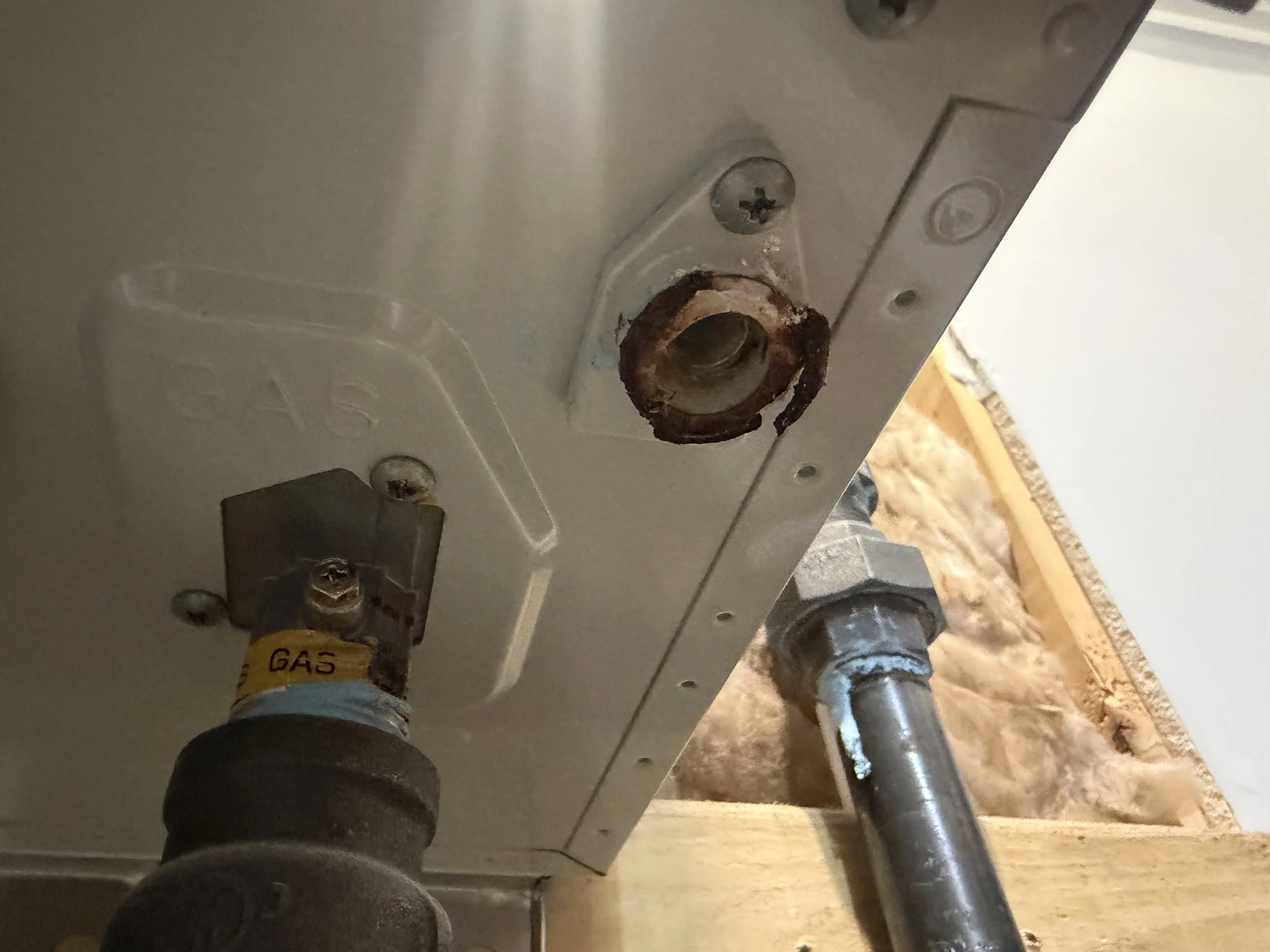
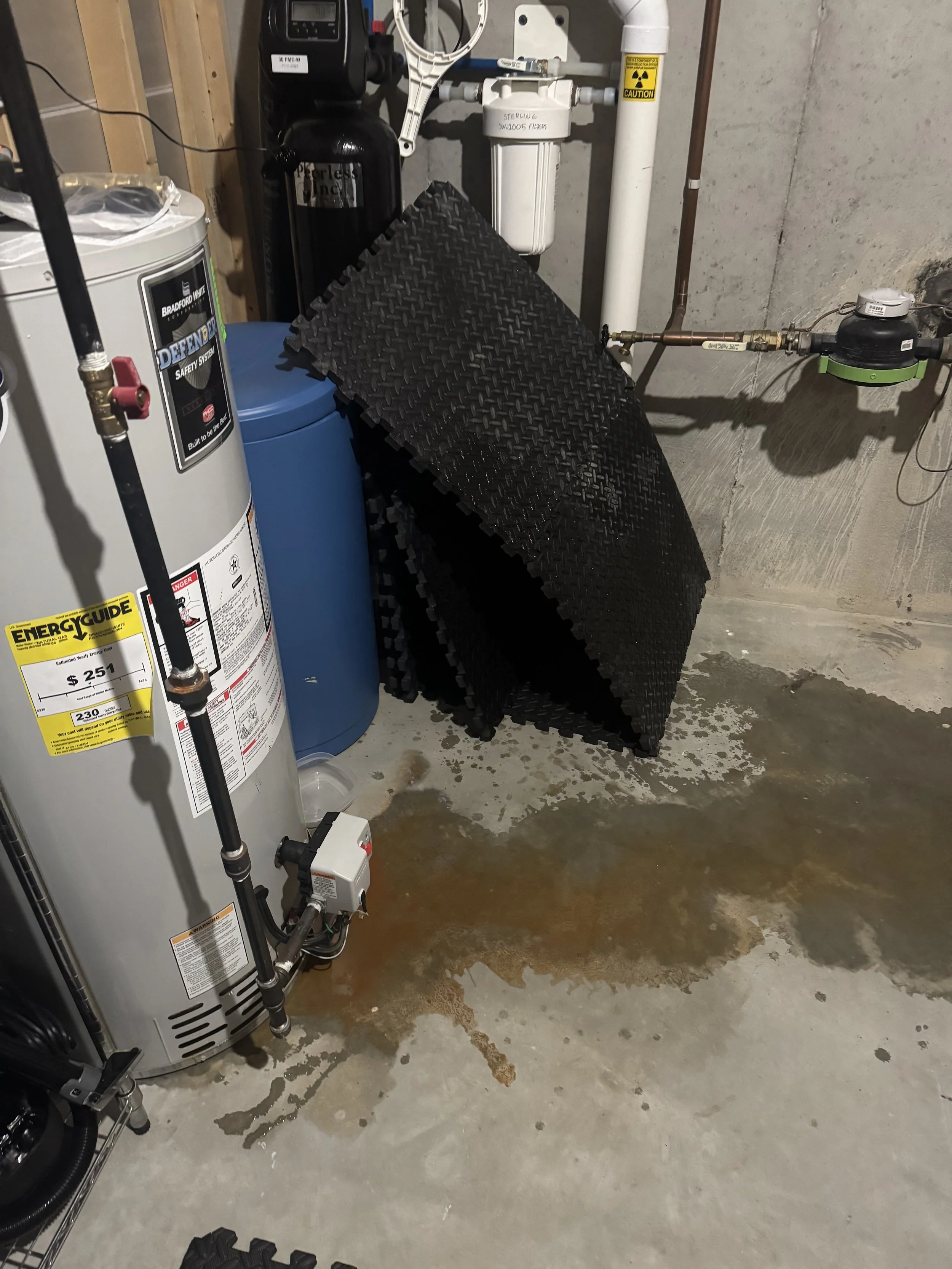
A Leaking Water Heater — Replacing an Aging Unit
The homeowner's complaint: "My water heater is leaking, and I'm worried about water damage."
The problem: A 50 gallon gas power vent water heater manufactured in April of 2017 is leaking. Rusty water discovered near the water heater.
The solution: After assessing the leak, the technician determined the tank had failed and a replacement is necessary.
Turnaround time: Initial call came in at 7:00am. Water heater was replaced by 2:00pm.
Our recommendation: Recommended replacement with similar tank type water heater due to the home being put on the market in the near future.
The takeaway: Identifying the source of a water heater leak quickly can help homeowners make an informed decision and reduce the risk of further water damage.
Case Study 3:
Upgrading to Tankless — Improving Hot Water Performance
The homeowner's complaint: "We run out of hot water too quickly, especially when everyone is getting ready in the morning."
The problem: current 40 gallon gas standard vent is not keeping up with the families hot water demand.
The solution: Portage Plumbing Services installed a Navien NPE-240A2 tankless water heater solving their hot water demand issues.
Turnaround time: Initial call came in at 3:30pm. Water heater was replaced the next week. This was a non-emergency job.
Our recommendation: Yearly maintenance plan including descaling and cleaning the tankless water heaters heat exchanger.
The takeaway: A water heater upgrade should solve the household's actual hot water problem. Correct sizing and an appropriate installation are essential to getting the expected results.
Why Choose Portage Plumbing Services?
When your water heater fails, you need more than a replacement unit. You need a plumber who can identify the problem, explain your options, and help you make the right decision for your home.
Portage Plumbing Services has been serving homeowners in Portage, Kalamazoo, Battle Creek, and surrounding Southwest Michigan communities with professional plumbing repair and installation services for over 40 years.
We can help you:
Diagnose common water heater problems.
Determine whether repair or replacement makes the most sense.
Compare traditional tank and tankless systems.
Select equipment that fits your household's hot water needs.
Evaluate installation requirements and water quality considerations.
Understand your options before committing to a larger project.
Our goal is to provide a practical solution that addresses your immediate problem while considering the long-term performance of your plumbing system.
Schedule Water Heater Repair or Replacement
Whether your water heater has stopped producing hot water, is leaking, or simply isn't keeping up with your household, Portage Plumbing Services can help you determine the next step.
Here's what to expect when you contact us:
1. Schedule your service. Contact our team and describe the issue, including whether you have a tank or tankless water heater and whether there is an active leak.
2. Get a professional assessment. We evaluate the equipment and identify the likely cause of the problem. If repair is a reasonable option, we'll explain the recommended work. If replacement makes more sense, we'll discuss suitable alternatives.
3. Review your options. We'll help you compare equipment types, installation requirements, and costs so you can make an informed decision.
4. Complete the repair or installation. Once the scope of work is agreed upon, we'll proceed with the appropriate service and verify the system's operation.
Don't wait for a small water heater problem to become a major inconvenience.
Contact Portage Plumbing Services to schedule water heater repair or replacement in Portage, Kalamazoo, Battle Creek, and Southwest Michigan.
Call: (269) 372-5902
Website: https://portage-plumbing.com
Email: info@portage-plumbing.com
Let our team help you get your hot water back and find the right solution for your home.
Frequently Asked Questions About Water Heater Repair and Replacement
Should I repair or replace my water heater?
Repair is often worthwhile when the unit is relatively new, the tank is sound, and the problem is limited to a replaceable component. Replacement is generally preferable when the tank leaks, the unit is nearing the end of its service life, or repairs are becoming frequent and expensive.
How long do water heaters typically last?
Many conventional tank water heaters last around 8–12 years. Tankless models can often last longer, but actual service life depends on water quality, maintenance, usage, installation, and the specific equipment.
Is a tankless water heater worth the extra cost?
It can be, particularly for households with high hot water demand, limited space, or an interest in improved energy efficiency. However, installation costs are typically higher, and the right system must be sized for simultaneous hot water usage. A tank water heater may be the better value for some homes.
Are tankless water heaters good for homes with well water?
They can be, but water quality matters. Hard water, iron, and sediment can create maintenance challenges. Testing the water and selecting appropriate treatment and maintenance practices can help protect the system.
How much does it cost to replace a water heater in Portage, Battle Creek or Kalamazoo?
The total installed cost depends on the type and capacity of the water heater, existing connections, fuel supply, venting, and any additional work needed. Contact Portage Plumbing Services at (269) 372-5902 for pricing based on your home's installation.
Can a leaking water heater be repaired?
Sometimes a leak originates from a connection or valve that can be repaired. A leaking storage tank caused by corrosion or deterioration generally requires replacement. Have the source of the leak evaluated promptly.
How quickly can a plumber replace a water heater?
A straightforward replacement may be completed in a few hours, while more complicated installations or tankless conversions can take longer. Actual scheduling and completion time depend on equipment availability, installation conditions, and the scope of work.